Precision Pallet, LLC Employee Handbook
Orientation Training: Dismantler
Welcome to your first day at Precision Pallet. LLC. In this packet you will find a brief overview of responsibilities associated with your new position. You will also be walked through a safety training program that was designed for your specific roll. The purpose of this training period is to ensure that you are familiar with all of Precision Pallet, LLC’s worker and safety policies. At Precision Pallet we are dedicated to the safety and wellbeing of our employees as well as the quality of our product and efficiency of production.
SAFETY FIRST
The dismantler is an open band saw designed to disassemble used pallets for recycling purposes. Because of the nature of this machine there is a real risk of serious injury or death of proper safety guidelines are not followed. Failure to follow the safety procedures outlined below could lead to disciplinary action being taken up to, and including, termination. The safety guidelines are designed outlined are designed to protect you as the employee and the interests of the Precision Pallet, LLC (the company) and we take them very seriously.
What Is PPE?
PPE or Person Protective Equipment are equipment provided by the company to ensure the safety of our employees. You may purchase your own PPE if you prefer, however, it must be approved by the company’s Safety Coordinator prior to use on the production floor. Below is a list of PPE that will be required for your new position.
- OSHA approved safety glasses.
- OSHA approved hearing protection.
- Work gloves
The above PPE must always be worn while at your designated work area. To ensure you are practicing safe working habits you will be expected to obey all of Precision Pallet’s safety policies. We will cover the major highlights of the safety policy in this training orientation, but it is highly recommended that you read through the safety policy for yourself. A copy of the safety policy will be provided during the onboarding process.
Safety Glasses
According to a study done by Safety + Health Magazine nearly 750,000 work related eye injuries were reported in 2017. Over 40% of those injuries took place in a manufacturing environment. 90% of those injuries could have been prevented with the proper use of approved protective eyewear. * That’s why we provide safety glasses to our employees and make them mandatory throughout most of the plant. Below are the mandatory guidelines for when safety glasses MUST be worn.
- In your designated workspace and/or within 10 feet of all other active workstations.
- Anytime you are using a pneumatic tool such as nail guns, staple guns, impact drivers, air compressors, etc. If an air hose connects to it, you MUST have your safety glasses on.
- While using any blunt force tool such as hammers and prybars.
- If you are using any handheld power tools such as grinders, Sawzall’s, circular saws, etc.
- Any machine or tool that has a blade.
A good rule of thumb is to simply wear your safety glasses anytime you are on the production floor. Dust and other floating debris can be a hazard anywhere throughout the plant. If you have a question about whether you should have your glasses on to perform a certain task, chances are you should. Do the smart thing and put them on.
If you have further question you can ask your supervisor, the company’s Safety Coordinator, or refer to the company’s safety policy.
Hearing Protection
Did you know that approximately 18% of all manufacturing workers have hearing difficulty? According to the National Institute for Occupational Safety and Health “24% of noise-exposed Manufacturing workers report NOT wearing hearing protection.”* That’s the number one reason for hearing loss in manufacturing worldwide. Most hearing related issues can be prevented by the proper use of approved hearing protection. That’s why we provide approved hearing protection to our employees and make the wearing of hearing protection mandatory in all production environment. Below are the mandatory guidelines for hearing protection:
- Hearing protection MUST always be worn while on the production floor during production hours.
- Anytime you are using any power or pneumatic tools outside of the production fool, but still on company property.
- If you are using your own hearing protection it MUST be approved by the company’s Safety Coordinator prior to use.
- Under no circumstances should headphones, AirPods, or earbuds be used as hearing protection. There are approved noise canceling headphones that can be purchased, but they MUST be approved by the company’s Safety Coordinator prior to use.
Hearing damage is caused by high frequency short wavelength ambiance noise and vibrations produced by most machinery, saws, heavy equipment, and pneumatic tools. Listening to music through earbuds adds to the ambiance noise already present in the manufacturing work environment. This leads to even faster degeneration of hearing then if no hearing protection was being worn. Be smart and protect your hearing.
Work Gloves
One of the greatest risks of infection from workplace injuries comes from puncture wounds and scrapes. Injuries that seem very insignificant, such as splinters, can become serious very quickly if infection sets in. The best way to treat a puncture wound is to prevent it from happening altogether. That’s why the company provides work gloves to all employees working in the production environment.
It’s important to wear work gloves at your workstation and anytime you are handling pallets or raw pallet materials. It’s not uncommon for exposed nail heads to be sticking out of freshly built pallets which can cause a hazard if handled without gloves. Though nails can still pierce through work gloves, they still provide an extra layer of protection. It’s also not uncommon to encounter broken or jagged boards, which pose a risk of abrasions and/or splinters. It’s important to be aware of what pallets and pallet building materials you are handling prior to grabbing ahold of or placing weight on them. In situations where pallet building materials have been chemical treated or are wet from rain glove liners can be worn to prevent exposure to chemicals.
WORKING AROUND FORKLIFTS
Precision Pallet has a very high amount of fast paced forklift traffic so it’s important to always be aware of your surroundings. Forklifts are used to move stacks of pallets around the plant and to distribute pallet building materials to designated workstations as needed. This means forklifts will be in and out of your workspace periodically throughout the workday. This proximity with forklift operations opens the door for potential risks in the workplace. Below are some guidelines you should follow to help prevent accidents while working around forklifts.
- If you hear a forklift enter the production floor, take not of which door it enters in and which direction they are going.
- If you are expecting a delivery of pallet building materials or a pickup of a completed stack of pallets be prepared to move.
- Make sure you are aware of you air gun hose so if you must move out of the way it doesn’t become a trip hazard.
- Always have an escape plan ready encase of an emergency. You should be able to get out of the way without any obstructions.
- Make eye contact with the forklift driver every time they enter your workspace.
- If you feel uncomfortable with the location of a stack of building materials, i.e. you become boxed in with no escape route, let the driver know so they can move it to a more appropriate location.
- Listen and be aware of sounded horns and revers beepers. They are signals that you may need to get out of the way. By being aware of your workspace and maintaining visual contact with forklift traffic in your work area we can greatly reduce the risk of a forklift related injury.
PROPER OPERATION OF THE DISMANTLER
The dismantler machine has two separate work areas. This allows for two individuals to dismantle pallets at the same time. Each station operates the same way and therefore will follow the same set of instructions. Positions can very throughout the workweek depending on scheduling meaning your station position could change from day to day. This shouldn’t affect your workflow since both stations operate identically.
Starting the Machine
To start the machine first ensure it is plugged in properly and the blade is clear of any obstructions, i.e. pallets, tools, boards, etc.
Ensure that all guards are in place and that all other employees are clear of the machine.
Ensure you are waring your PPE and press the black button on the control box located to the right of the blade deck. Figure 1
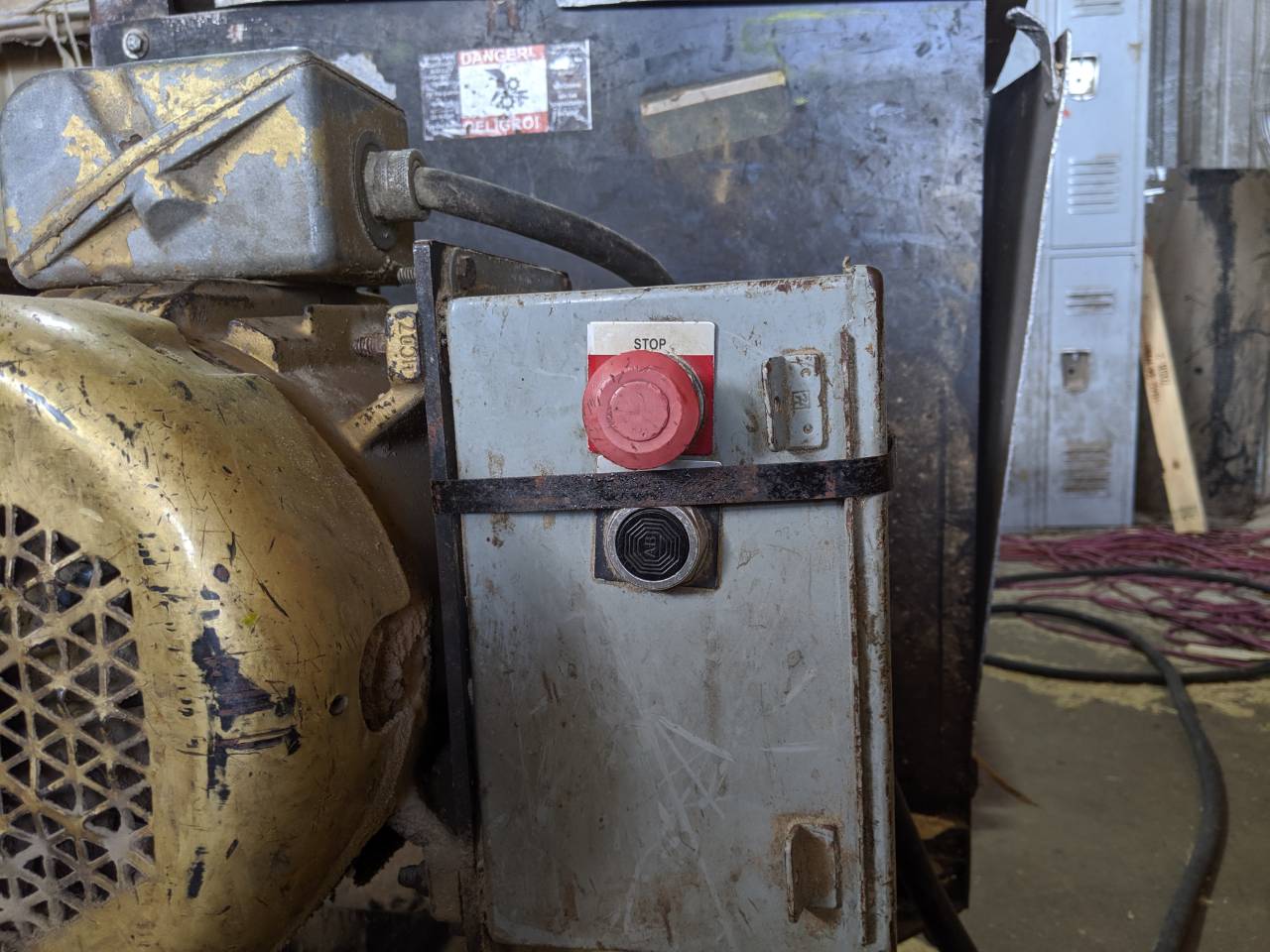
The red button is OFF. It’s also the emergency shutoff.
Proper Placement
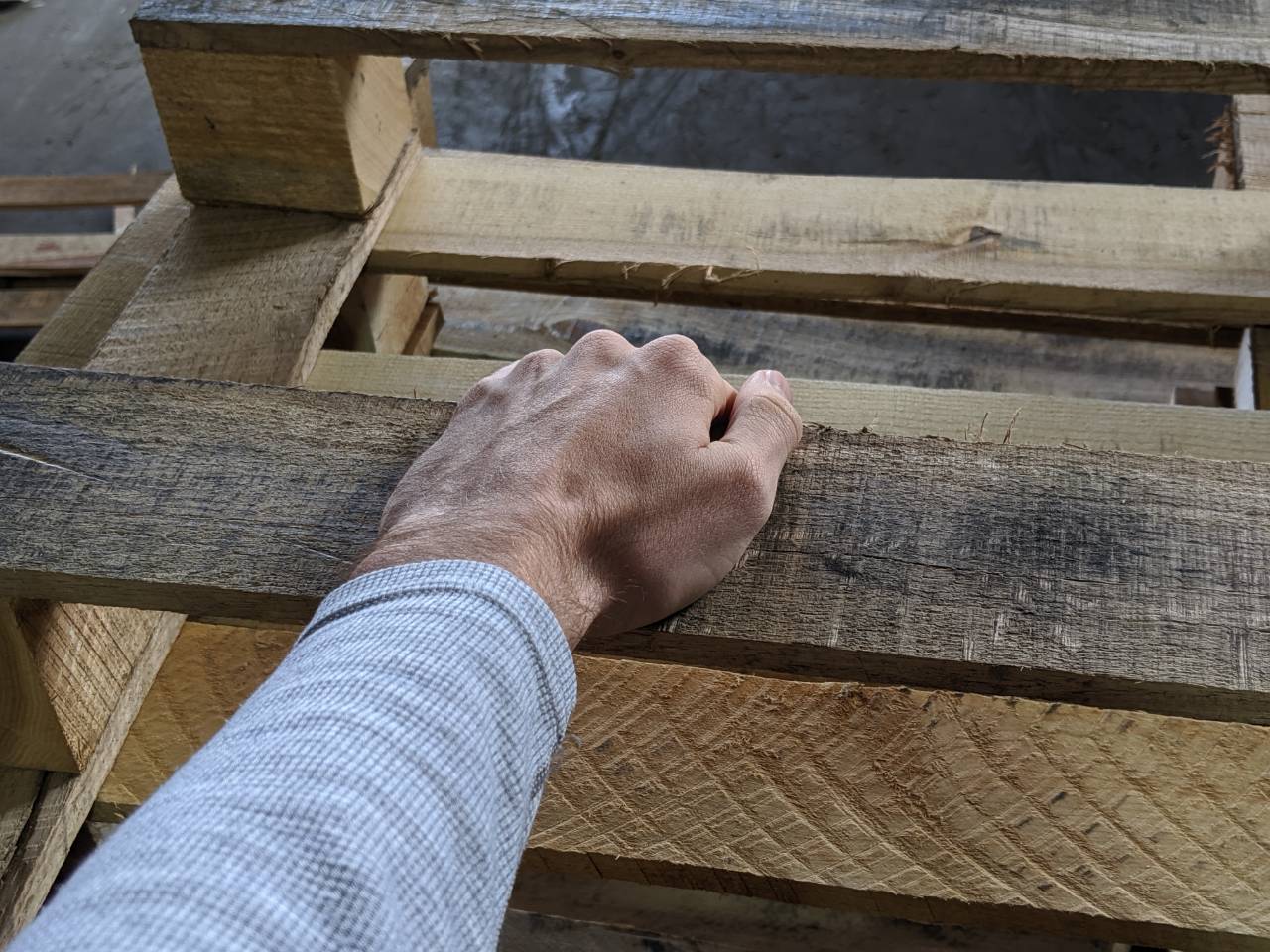
There are several pinch points that can be created if the pallet is not held correctly when placed on the machine. Figure 2

It’s important to ensure the pallet is being handled correctly prior to placing it on the machine.
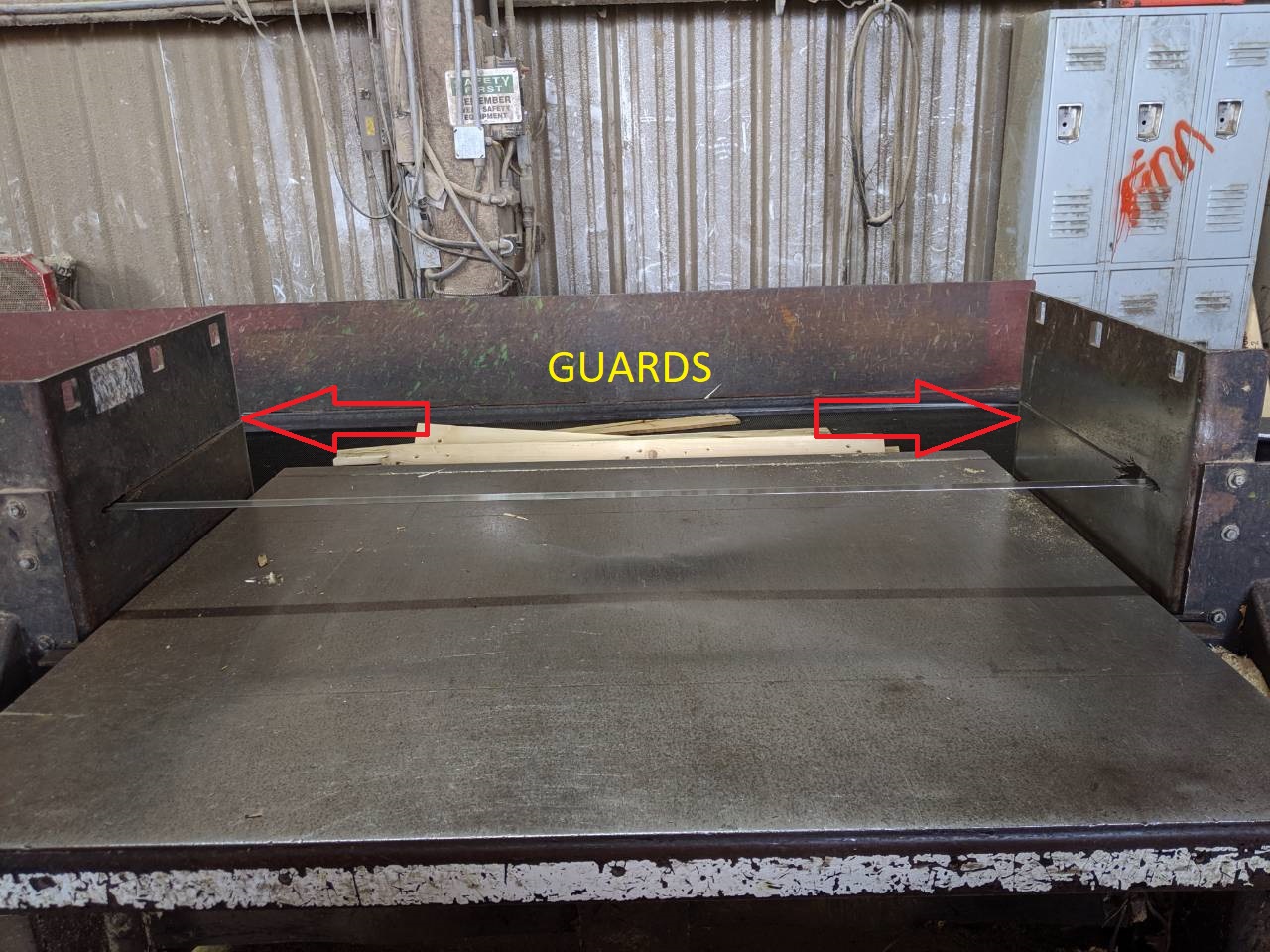
Proper placement or the pallet on the machine is key to ensuring safe operation. On either side of the blade there is a guard. Figure 3
The guards are in place to protect you from encountering the moving parts behind them and to protect those parts from encountering the pallet, which could cause damage to the machine. The guard on the right also acts as a pinche point for the pallet to push against as the blade cuts through the nails during the dismantle process. Figure 4
Since the blade cuts from left to right it’s important to place the pallet as close to the right guard as possible. Once the pallet makes contact with the blade it will be pulled to the right until it hits the guard. If the pallet is place on the machine to far to the left it can cause the pallet to violently jerk to the right causing possible injury to you and/or damage to the machine. Figure 5

Dismantling
The process of dismantling a pallet begins by grasping two of the pallet slats firmly with both hands.
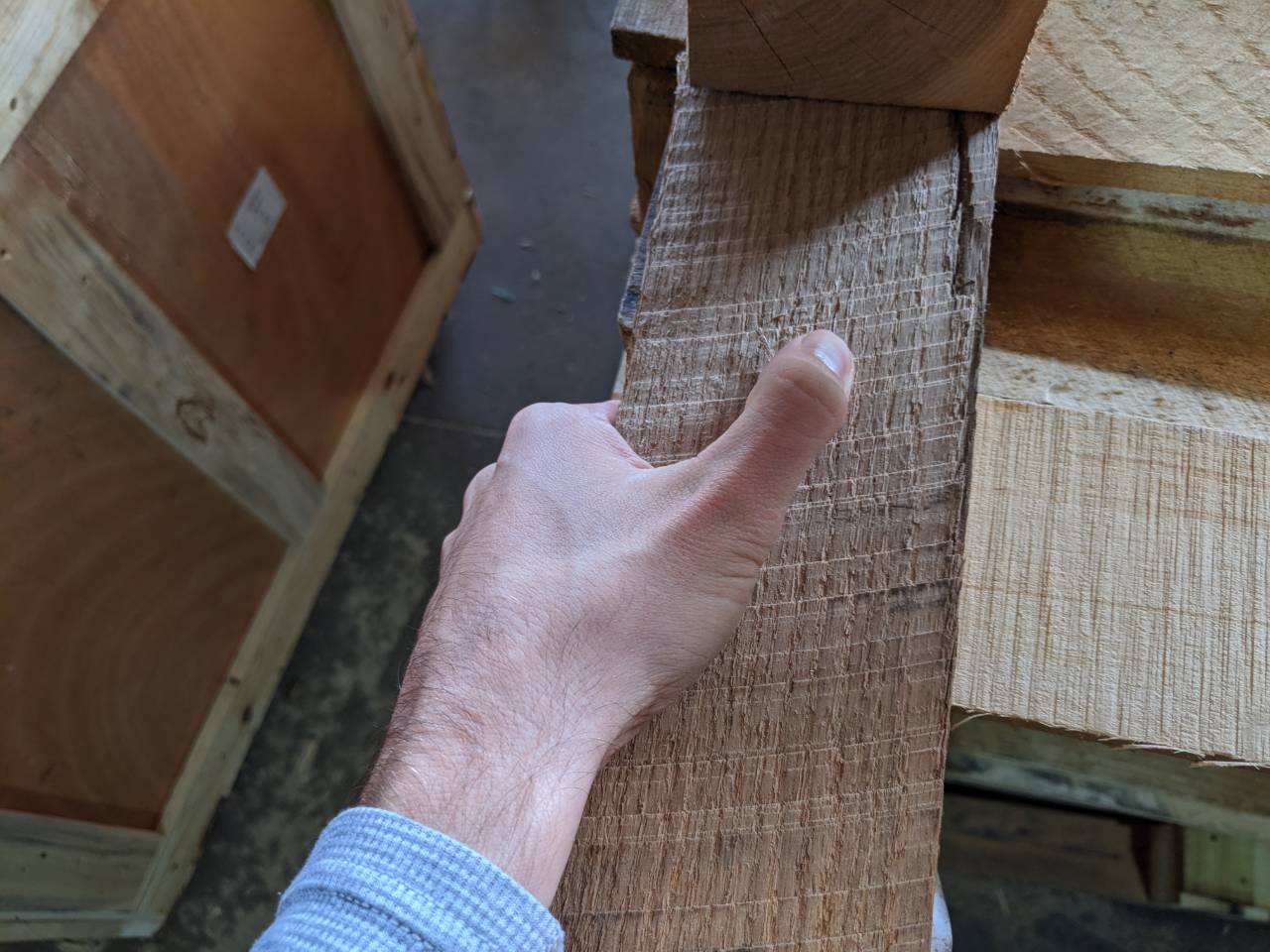
Do NOT grab the sides of the pallet (shown in Figure 6) as this could lead to possible injury of your hands.
Pull the pallet across the blade with the blade passing between the slats and the stringers/runners. Figure 7
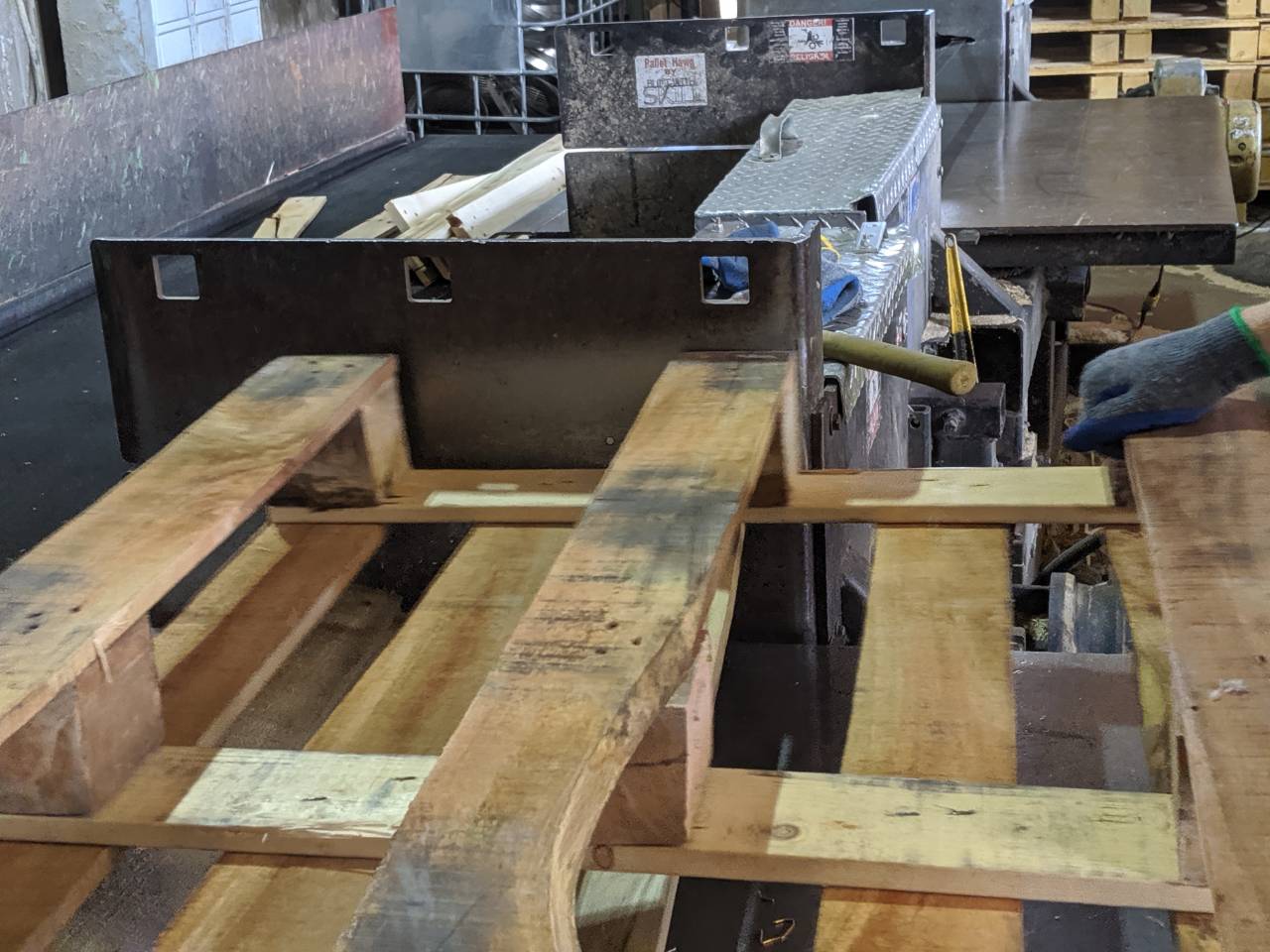
The slats will fall onto the conveyor and be taken to the trim saw for further processing.
Removing Debris
Sometimes the boards from a dismantled pallet will get stuck on the cutting deck. When this happens it’s important to follow proper safety procedure to remove the board. Follow the safety procedures outlined below.
- NEVER attempt to reach over OR under the blade. It’s tempting to do this in an effort to be more efficient, but there is no replacing your arm if you slip while attempting to remove the board. Figure 8

- Use a push board to gently push any boards remaining on the cutting dock onto the conveyor. If a board is jammed and cannot be removed by using a push board the machine must be shut down and locked out prior to attempting to remove the obstruction. Figure 9
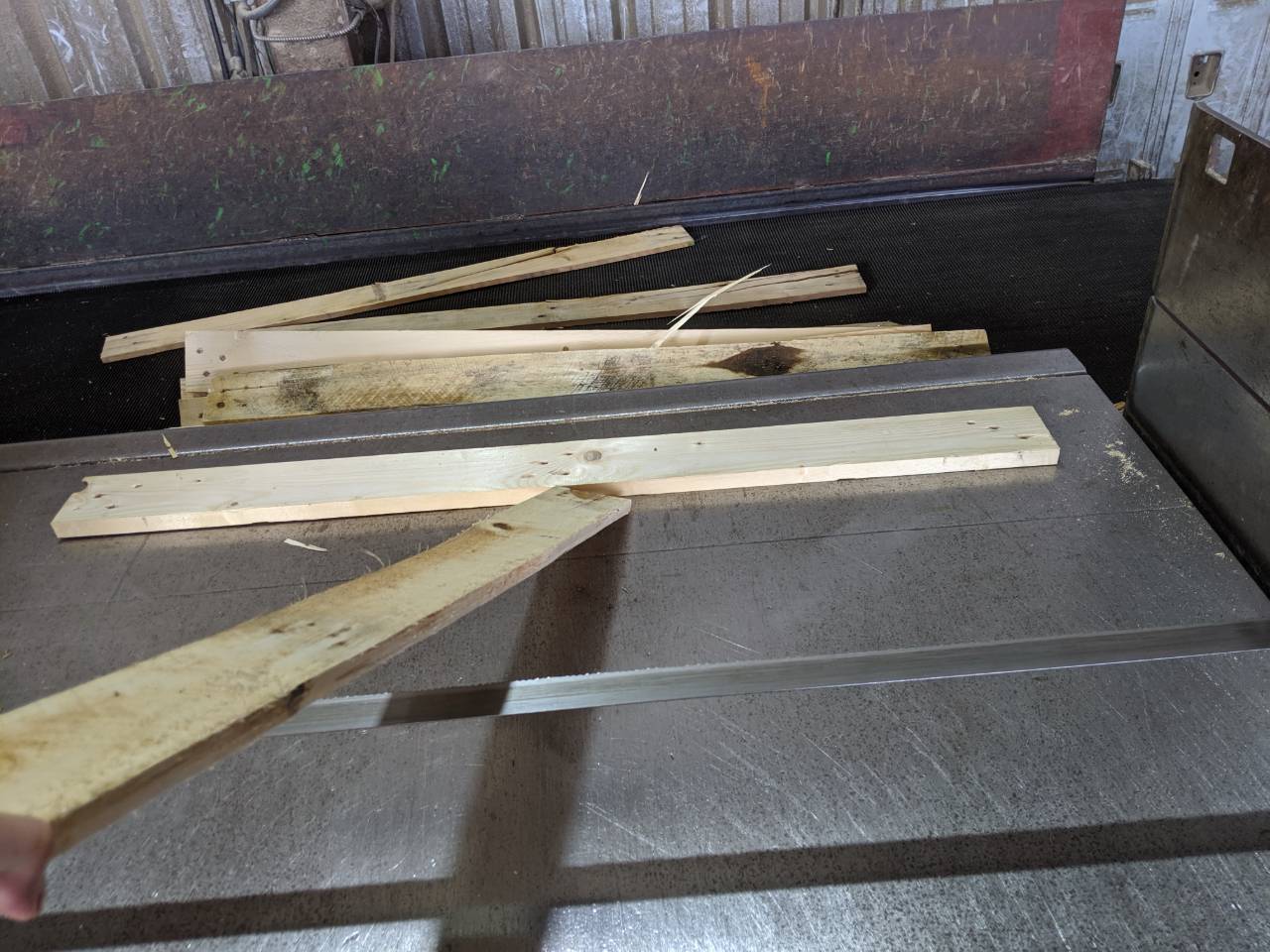
- At no point should any part of your body cross the line of the blade.
Conclusion
Always ensure that your hands are clear of the saw blade. Never reach over or under the blade. Be sure all guards are in place prior to operation.
Ultimately, it’s up to you to ensure all safety practices outlined in this guide are being followed. Failure to follow these guidelines may result in serious injury or death. It’s our goal as a company to ensure your safety and well being at all times. Accidents are costly both to you and to the company. That’s why at the end of the day our people are our greatest resource and we want to ensure you make it home without incident.
If at any point you feel that you are being asked to take unnecessary risks in order to complete a task it’s your right as an employee to speak up. We have an on-sight safety coordinator who will hear your concerns and address any safety issues as needed.